Phonics Words and Activities for Kids
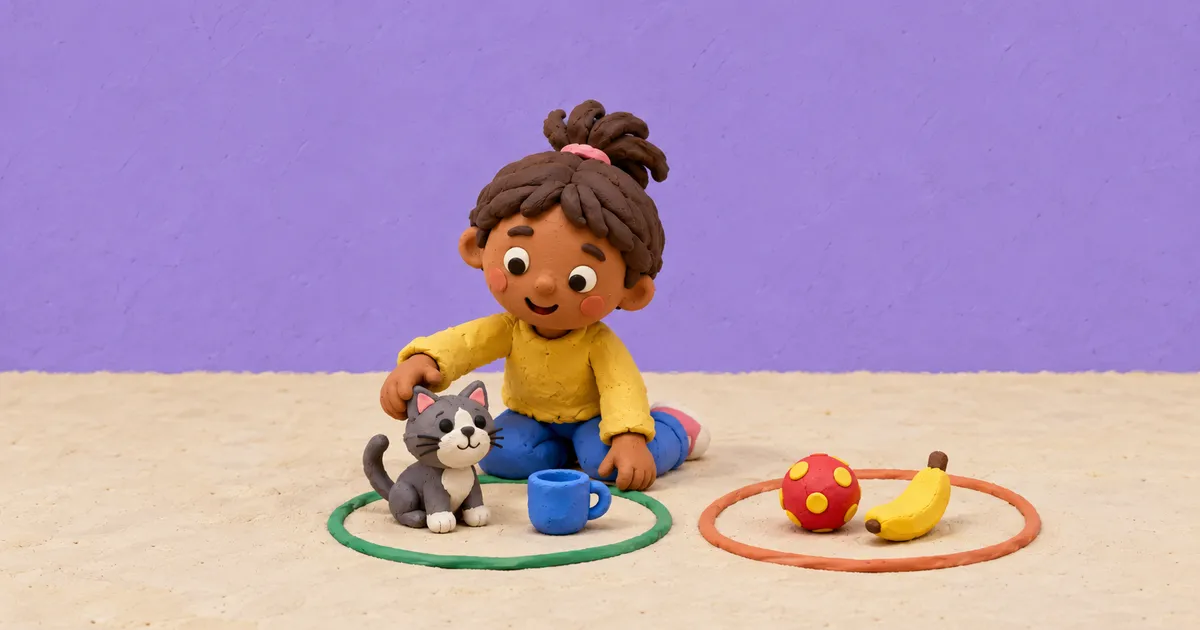
Phonics teaches children how letters and letter groups represent spoken sounds, then how to blend those sounds into words. Phonics Words and Activities for Kids should connect three actions: hearing a sound, matching it to a spelling, and using it in a word. A child might hear /m/, choose the letter m, and blend m-a-p to read map. The goal is to notice a spelling, say its sound, blend adjacent phonemes, and read or build a word.
📥 Phonics Words and Activities for Kids
A clear path from simple sounds to confident reading
Leave your email — we'll send the PDF to your inbox.No spam — the PDF plus one short reminder. Unsubscribe anytime.
What Children Learn Through Phonics
Phonics starts with speech. Children produce these speech units when they talk, even before they can name the letters representing them. Teaching links sound and spelling: /s/ can be written as s, while /sh/ uses the two-letter spelling sh.
Children practise blending and segmenting. Blending joins sounds for reading: /s/–/a/–/t/ becomes sat. Segmenting separates a spoken word for spelling: fish contains /f/–/i/–/sh/. A planned sequence lets new words build on sound-spelling links already learned. The Education Endowment Foundation’s phonics summary explains why systematic teaching works better than random sound patterns.
A Core Word Set in a Clear Order
Phonics Words and Activities for Kids starts with short, regular words that are easy to hear and blend. Begin with several consonants and one short vowel. Add spellings after the child can recognise and use earlier ones without a long pause.
cat, map, tap, sat, bag
sit, pin, lip, fin, fish
hot, log, fox, mop, pot
hen, bed, ten, red, pen
sun, cup, bus, mud, run
ship, chat, thin, ring, duck
rain, feet, boat, home, cube
This teaching bank is not a test list. Practise one pattern at a time and include earlier words for review. Spellings may represent multiple sounds: th differs in thin and this. English includes words that are not fully regular for beginners. Identify the regular part and explain the unexpected part instead of encouraging guesses.
Using Phonics Words in Context
A word gains meaning inside a short sentence. After blending cat, sat, and mat, a child can read “The cat sat on the mat.” The word the may need direct support, while the phonics words provide most of the decoding work.
Ask one meaning question: “Where did the cat sit?” This confirms that the child understands the sentence, not just its sounds. Then change one part: “The cat sat on the bed.” Rereading shows how the new word changes the meaning.
For writing, say a sentence aloud before showing it. The child counts the words, chooses one target word, and segments it into phonemes. A younger learner might write only sun. An older learner can write “The sun is hot,” then replace hot with another suitable adjective.
Activities That Fit Different Ages
For school-age kids, keep practice physical and brief. Place three letter cards on a table, say a sound, and ask the child to touch the matching card. Push counters together while blending m-a-p. Try a listening hunt for items beginning with /b/, accepting words the child can name confidently.
For school-age kids, use word sorts and sound swaps. Children can sort rain, feet, and boat by vowel spelling or change one phoneme at a time: map, mat, sat, sit. Ask them to explain each change, turning the game into focused reading and spelling practice.
For school-age kids, choose age-respectful words from school subjects and personal interests. Divide longer words into readable parts, such as sun-set, help-ful, or fan-tas-tic. When choosing Phonics Words and Activities for Kids at this age, avoid babyish pictures. Use word origins, syllables, prefixes, and suffixes to extend sound-spelling knowledge.
A Short and Repeatable Practice Routine
Use Phonics Words and Activities for Kids in a routine moving from listening to independent use. Eight or ten focused minutes can include several tasks. Stop while the child remains attentive, then revisit difficult spellings during the next session.
Keep the order stable while changing the words. A familiar routine reduces attention spent on instructions, leaving more capacity for hearing, reading, and spelling.
Try a Sound-swap Ladder
Build map with letter cards. Ask your child to change one phoneme to make mat, then sat, sit, and sip. Read each word after the change. If the child moves several letters, rebuild the previous word and ask which single speech unit must change.
In a one-to-one lesson, our tutors adjust the pace and listen closely to each response. At home, give the child time to blend, then offer the smallest prompt instead of saying the whole word.
Common Mistakes and Practical Fixes
Adding an extra vowel to consonant phonemes makes blending harder. Saying “muh” instead of /m/ adds an unwanted vowel to map. Model a clean, brief pronunciation. Stretch /m/ or /s/ when needed, but keep /t/ and /p/ crisp.
Children may identify words from pictures, sentence meaning, or the first letter alone. Pictures support understanding but cannot replace decoding. Cover the picture for the first attempt. Ask the child to inspect the whole word, say known letter values, and blend from left to right.
Do not treat an accent or home language as a problem. A multilingual child may hear or produce English phonemes differently. Model the English pronunciation, demonstrate mouth position when needed, and compare spellings without mocking either language. The goal is accurate, confident communication—not one national accent.
- Choose one decodable book for ages five to seven and reread it twice.
- Practice five phonics words daily, stretching each phoneme before blending the whole word.
- Use letter tiles to fix reversals, building three confusing words side by side.
- Pause after mistakes, model the correct pronunciation, then let your child retry independently.
- Track progress weekly by noting ten mastered words and two patterns needing review.
When a word has several meanings or pronunciations, Cambridge Dictionary is a useful check before turning it into child-friendly examples.
Frequently Asked Questions
When Should a Child Start Learning Phonics?
A child can begin when they can follow a short listening game, distinguish word beginnings, and handle several letter shapes. For a younger child, use oral games and letter play instead of worksheets. Older beginners may progress faster through basic patterns but still need a planned sequence. Starting later does not remove the need for blending and segmenting foundations.
How Many Phonics Words Should We Practise at Once?
Start with a small group built from spellings your child knows. Four or five words may cover a new pattern. Add variety through listening, building, reading, and writing, not a longer list. Once the child reads the words without guessing, mix them with earlier patterns to test recall instead of memorised order.
Does Learning Phonics Confuse Multilingual Children?
No. Children can learn that languages connect letters and speech units differently. Name the language being practised, model the English word, and compare languages when the comparison helps. Keep all family languages in normal use. Phonics supports English reading; it does not require replacing a home language or hiding an accent.
What If My Child Remembers Words but Cannot Read New Ones?
Return to phoneme-by-phoneme blending with words sharing a known pattern. Phonics Words and Activities for Kids should transfer knowledge to an unfamiliar word, not teach card memorisation. Use pairs such as map and tap, then introduce nap. If guessing continues, reduce the spellings and model blending again.
A short one-to-one lesson can show what level and pace fit your child — book a trial English lesson.
Stay updated on our latest tips and resources by following us on Instagram LearnLink.